Tuesday, April 6, 2010

Gnocchi: Trial #1

I'm a huge fan of gnocchi. I have no specific expertise in the area, but after trying it in various locales it seems that its pronunciation is of endless variations (NYOH-kee according to the Food Lover's Companion), but its preparation options are even more endless.


I've had the opportunity to try gnocchi in a variety of cities recently: Stella Osteria in Ottawa; Weczaria in Saskatoon; Tulio in Seattle . . . and the list goes on. Having sampled all these various concoctions, I found that I truly had to separate the gnocchi from the sauce. Was it the little bundle of potato based flour that I was enjoying or the sauce.

Turns out it was both, however, upon breaking it down I did reach a conclusion. Of the actual gnocchi varietals, I truly adore the pillowy bundle that is tender and melting compared to its firmer cousins. So I began reviewing gnocchi recipes. As near as I could figure there are two schools of gnocchi (just like risotto) the French and the Italian. The French are based on a choux pastry recipe, whereas the French on more of a dough.

I've made the French style before, but it didn't have the pillowy substance that I was looking for. So this evening I opted to concoct a French variation (or at least that's what I call it). I started by baking some potatoes. Usually these recipes call for Yukon baking potatoes, but I didn't have any so I opted for teenie red potatoes (gasp from the crowd). I baked them at 400F until tender then riced them. I forgot to take a picture of the compilation of riced potatoes, but here's the remnants.

When my potatoes were nearing completion I started my choux pasty. It's a standard recipe that I've used for various things. You start by heating up butter and water. Then you quickly add flour and stir. Then you add eggs - one at a time - and stir in between. Any recipe I've seen says specirfically to use a wooden spoon for this - I'm not sure why, but am not one to mess with tradition.  My arms were sore from stirring (perhaps my afternoon of raking leaves didn't help the cause). Once I finished this process I started it all over by adding my riced potatoes and some parmesan cheese and stirring more (it's even hard to type this my hands are sore from the stirring!).  I now had my dough, which admittedly was much diffent, aka pasty, compared to other gnocchi doughs I've made.

I set up my own little gnocci production facility complete with a tea towel, flour, the dough, and a handy gnocchi roller. I dropped large teaspoons of the pastry onto the floured portion of my tea towel then rolled about, moving the nuggets to the other side of the tea towel in the process. I also cut them in half (or thirds) as requried to try ot maintain some uniformity of size. As for my gnocchi roller, purchased at an Italian grocery in Edmonton, I never realized its full potential until this cooking event.

After the little nuggets were all prepared, I put some water on to boil. Once boiling I added the gnocchi and lowered the heat to a simmer (boiling would obviously destroy them as they are so tender) for 15 minutes.

For serving I tried a parmesan cream sauce as well as a simple parmesan sprinkle with butter.

The verdict: my gnocchi had that pillowy soft texture that I love. But the sauce and finishing left a lot to be desired. I will have to try this again, hence the Trial #1 in the title - more experimenting to come.

Saturday, March 20, 2010

Bobby Does It Again: Tuna Steak

Bobby Flay that is. I think I've previously mentioned that I wasn't necessarily a Bobby fan until I ate at Mesa Grill in NYC last summer. I had nothing against the guy, I just didn't realize he was a guy after my own heart with his mix of spicy southwestern cuisine. Once discovered though, I'm apparently a huge fan. A groupie as it were.


Today I purchased lovely tuna steak for dinner. Tuna isn't a usual on my grocery list. It's not that I don't like it, it's that my locale doesn't exactly lend itself to great tuna. But the gods of excellent food storage and flight travel do bless, and I was able to obtain a beautiful, non-fishy smelling, perfect coloured tuna steak.

Having secured the lovely tuna steak, the only dilemma I had in hand was to determine preparation options. A relatively easy option, as Mexican flavour was beckoning, and I knew Bobby Flay could deliver.

In his Mesa Grill cookbook, there are two tuna recipes. Of course I opted for the one that I had the ingredients for (at least nearly). The thing about Bobby's recipes in this book is the ingredient lists are long, and therefore the recipes look daunting. Look again, as it's simply his signature blend of simple flavours (usually) that are assembled using pretty much usual ingredients.

First I prepared his apricot glaze. My biggest variation here was the lack of apricots. But certainly the apricots were for sweetened flavour and colour, so a mix of peach and mango preserves seemed sufficient . Although my idea was appropriate, because I wasn't using dried fruit, I had to extend the reduction phase almost triple the time to achieve appropriate consistency in the sauce.

Whilst my glaze reduced, I prepared the rub for the tuna steak. All straight forward - ingredient permitting and with the aid of a trust spice grinder (formerly a coffee grinder). Having made several BF rubs I would depict this one as typical. That's not a slight, but he definitely has a unique flair. As well, I often find myself thinking I'm not crazy about what I'm adding, but I've learned to trust the process - Bobby will deliver.

In the end I finished my glaze as prescribed (red wine vinegar, Dijon mustard, mint)and seared the tuna (I'd do it a smidge less next time). I also put together accompaniments - guacamole salad and refried black beans (not your usual, but a prepared option directly from Mexico - thanks Jimena).

Mmmmm.


Sunday, January 24, 2010

Braised Curried Goat with Curried Chickpeas and Coconut Saag


Mystery Goat. 
Not Your Average Goat. 
Boldly Goat Where No Goat has gone before. 
I did the Goat my way. 

These are just a few of the names I was contemplating for this post. There were a few more, but these are the ones that I could remember when typing.  Why so many names? Because this was a unique dish (for me) and I felt like there were so many ways to describe it. 

First off, I'm not even sure what part of the goat the meat came from. How can this be? Well, a dear friend of ours was in Montreal a few months ago and picked up this goat (some for him, some for us). I couldn't use it said weekend, so I vacuum packed it. It was a larger cut so I knew I would have to wait for a weekend so that I would have lots of time for defrosting and preparation. The only part that I could discern in this collective chunk of meat was a leg - clearly a leg. The other chunk - I'm just not sure. But that didn't deter me. 

My immediate desire was to curry this mystery goat. Mostly because that's the way I've had goat previously (in Jamaica and at a local Asian restaurant). Alas, I did some digging on the internet, and didn't find a satisfactory recipe, so I decided to wing it. 

Defrosting. On Saturday evening when it was clear that Sunday would be a suitable goat-day, I pulled out said beast from the deep freeze. I let it stand at room temperature for about 45 minutes just to get a bit of frost off. I then plunged it into a cold Dutch oven pot filled with cold water and put into the refrigerator overnight. In the morning, the goat was nearly defrosted, although it had a shield of ice all around it which removed easily when cleaned under running water.  

Given that I wasn't quite sure how to cook this goat, I resorted to a bit of a Julia Child braising method - sans the early prep work of browning the meat. I made a braising mixture in the Dutch oven (the goat was sitting on a plate while prepping this step) of curry powder, tomatoes, carrots, onion, and chicken stock (I suppose you could use goat stock if you happen to have this handy). I chucked it into a 250F oven at 9 a.m. - and left for the day to run amok around town with my husband. At 2:00 we popped back home just to make sure the goat was ok. No boiling over. No smoking cauldron setting off fire alarm bells.

At 5:00 p.m. the goat appeared cooked so I removed it from the braising liquid and picked through the meat. This was probably the most labor intensive part of the task. I had to not only remove bones, but large bits of fat, and scrape of slippery pieces of silver skin. The end result was a rather large amount of lovely, tender goat meat that resembled pulled pork.

Although the goat had braised in a curry liquid, it needed more curry. So after picking it over, I added back the strained braising tomatoes and onions, a good 1/2 cup garam masala paste, and 4 hot chiles (ground). I then covered it and let it finish in the oven to warm through and blend the flavours.  

Meanwhile, I prepared an adaptation of a delicious curried chickpea recipe that was in this month's LCBO "Food and Drink" magazine and basmati rice. In the last few minutes I got to thinking that I should have some sort of veggie so prepared an ad hoc coconut curried spinach recipe.

This dinner was delicious. Outstanding. My husband rated it in the top 10 of all dinners ever!

Braised Curried Goat
1 can diced tomatoes
1 onion roughly sliced
1 carrot roughly chopped
1-3 cups chicken stock
2 tbsp curry powder
3-4 pounds goat meat (all in, bones and fat)
1/4 cup garam masala paste (I used Patak's)
4 dried hot chiles, ground (in mortar and pestle or spice grinder)

Mix the tomatoes, onion, carrots and curry powder and 1 cup of the chicken stock in a large dutch oven. Place the goat into the mixture and add additional chicken stock to cover. Place into a 250F oven and let cook for 6-7 hours.

Remove the goat from the braising liquid and pick out the meat discarding any bones, fat, silver skin, or slippery filament. Strain the braising liquid and discard any additional bones, fat, silver skin or slippery filament. Once you have all the meat picked through, put into a casserole dish. Add back the strained veggies. Mix in the garam masala paste and hot chiles. Return to a 300-320F oven for 1 hour to blend the flavours.


Chickpeas with Garam Masala
Adapted from LCBO's Food and Drink Magazine, Winter 2010 magazine.
The saute times may seem short but are important so that the ingredients are not overcooked or become bitter. This is a trick that I learned from my friend Seema.


1 tbsp olive oil
1 onion diced
4 cloves garlic
2 tbsp fresh ginger, minced
4 dried hot chiles, ground
2 tsp cumin seeds
1 can chickpeas, rinsed and drained
1 1/2 tsp garam masala
1/2 tsp salt
1/4 cup water
Heat the oil in a frying or saute pan. Add the onion and saute one minute. Add the garlic, ginger and chiles and saute 2 minutes. Add the cumin seed and saute one minutes. Add the chickpeas and salt. Stir to mix and stiry-fry for about 5 minutes. Adjust the heat to medium-low, add the water and let simmer for 15 minutes or until the other dishes are ready.


Coconut Saag
1 tbsp olive oil
1 medium onion, diced
2 cloves garlic, minced
1 tbsp curry powder
1 small bag spinach
1/2 can coconut milk*
Heat the oil in a large pot. Saute the onions and garlic until softened, about 3 minutes. Add the curry powder and saute 1 minute. Add the spinach and stir until reduced (it will shrink a lot). Add the coconut and mix through .

*The half can coconut milk isn't convenient as what do you do with the other half. Add as part of the liquid to basmati rice or add to a soup.

Sunday, January 17, 2010

Cream Cheese Stuffed Prunes Wrapped in Bacon

For the past 10 years we've gotten together with some friends of ours for an annual Christmas dinner, alternating houses. Traditions are a great thing, as you can rely on them. Although we think the world of our friends, and always have a barrel full of laughs when we get together, we rarely have the opportunity to get together other times during the year. So I'm glad that at a minimum I have our trusty tradition to rely on.

The other great thing about traditions is they often beget other traditions. In this case, we've each established an appetizer that we serve at our respective houses when hosting. At our friend's house, the appetizer is this fantastic coconut shrimp recipe. You can find it at the Kraft kitchens website and it is delicious. At our house we make cream cheese stuff prunes wrapped in bacon.

This is one of those recipes where the first time I saw it about 15 years ago I wondered, who was drinking in the kitchen when they decided to put these ingredients together? But alas, don't knock it until you've tried it, it's fantastic. Since then, I've even seen several similar variations pop up.

The best thing about this recipe is its simplicity. The name says it all. It says all the ingredients, and pretty much tells you the method. Does it get any better?

Only when you taste them.


In case you need a bit more detail than just the name, here's the easy recipe.


Little Peasants
The first time I tried these was at a Peruvian restaurant and they were called Little Peasants. I'm not sure if this is an authentic name, but it's kinda cute.
12 pitted prunes
1 250g pkg cream cheese (you can use light, but don't use the softened kind)
12 slices bacon (if they are extra long, go with 6 cut in half)

Preheat oven to 400F.
Slice each prune in half, but not quite cutting right through.
Cut the block of cream cheese into 12 equal portions
Squish the cream cheese into each prune and mold to be a bit rounded. Wrap with the bacon, leaving the end pieces to meet underneath the prune. Place in a casserole dish and back for 20-25 minutes until bacon is cooked

Sunday, December 27, 2009

My Old Man's Supreme Chicken (aka chicken breasts stuffed with mushrooms en croute)


I have to clarify that this dish isn't from my "old man". Although my dad (aka pop) was a good cook, this recipe is from Jamie Oliver's Happy Day's cookbook and is referring to his "old man". Nonetheless the premise that this is a supreme chicken dish is not affected by this nuance.

The way this dish came about amuses me - it's a bit of a long-winded story, so I'll say that up front so you can indulge me.

We woke up this morning to frigid below normal (-33C) temperatures - did I mention below  normal?
 
So the objective for this evening's meal was to use the cooktop, oven or whatever cookery appliance it took to offer some extra heat to warm our chilled bones. 

I wasn't prepared. Although I love cooking, I get really uptight when I don’t have a gameplan - although I may have endless options at my fingertips, I enter a state of indecisiveness when just thrown to the wind.

Our first plan was a casserole of the pasta and ground meat sort. Only issue arising was the lack of ground meat (damn you inaccurate deep freeze log). So then what. Another log to the rescue. With the endless number of cookbooks I have, I've started this log of "want to try" recipes. I flipped there and found a Jaime Oliver recipe from his Happy Days cookbook  My Old Man's Supreme Chicken (aka Chicken Breasts Stuffed with Mushrooms En Croute). The first test - I had all ingredients on hand. The second test was to show the image to my husband to ensure he was interested to have said same dish (my concern here being he tends to prefer a healthier meal than me and this one involved puff pastry). He was onboard (thank goodness for numbing cold). So let the games begin.  

I used four boneless skinless chicken breasts. I had to defrost them as they were frozen (no, not because of the days events, but by design). I pounded them with a mallet to even thickness in a plastic bag (no fuss no muss). 

Whiles the chicks defrosted I had sautéed the mushrooms (a blend of dehydrated mixed mushrooms now rehydrated and fresh crimini mushrooms) with garlic. 


For preparation I placed about 1/2 cup of the mushroom mix into each chicken breasts, then wrapped in strips of puff pastry.


Baked in a 400F oven (notice the switch from Celsius - I must be Canadian). The topper was a simple whole grain mustard/white wine/cream sauce (how could you possibly go wrong with this combo). 


To serve I broke the mixed colour on the plate rule. I served with roasted cauliflower (yum yum) and a basic arugula salad with fig infused vinaigrette (double yum). 

This was a weeknight dinner. A little bit of work, but nothing crazy. Incredible tasting. Impressive presentation. Do try!


Thursday, December 3, 2009

Southwest Pork Loin

Over at my other blog, I've talked about my love for Mexican cooking, and my recent evolution to Southwestern cookery thanks to Bobby Flay.


And recently I was craving some of that tasty, yet spicy flavour. So to satisfy my cravings I decided to adapt a BF Mesa Grill recipe for my likings.


I started with a pork loin roast. Pork loin roast on its own can be tremendously boring. In my opinion it really is one of those food products that requires some extra embellishment to turn it into a guest worthy dish. Enter the rub. 


I prepared a modified version of BF's southwestern pork rub. Modified on several fronts: i) his was for pork tenderloin vs. loin; ii) I didn't have spice powders on hand, just whole dried chiles; and iii) I reduced the cinnamon and allspice as I find that too much overwhelms the recipe.


Applying the rub is a very satisfying step. It makes the loin a lovely dark, appetizing colour. Searing the sides afterwards is even more satisfying as they colour turns a gorgeous blackened warm colour, and the smell infuses the whole house with a completely welcoming aroma.

After searing on all sides, you finish in the oven. Allowing just enough time to finish other side dishes. Serve with Bobby Flay's Bourbon Ancho Sauce (amazing) as the perfect complemetn.

Bobby Flay has this recipe posted on his website. 

Sunday, November 22, 2009

Boeuf Bourguignon


With the movie Julie and Julia out now it seems a bit cliché to be preparing Boeuf Bourguignon. But, it was because of the movie that my husband requested this dish. And even though its cliché, I had never prepared Boeuf Bourguignon.


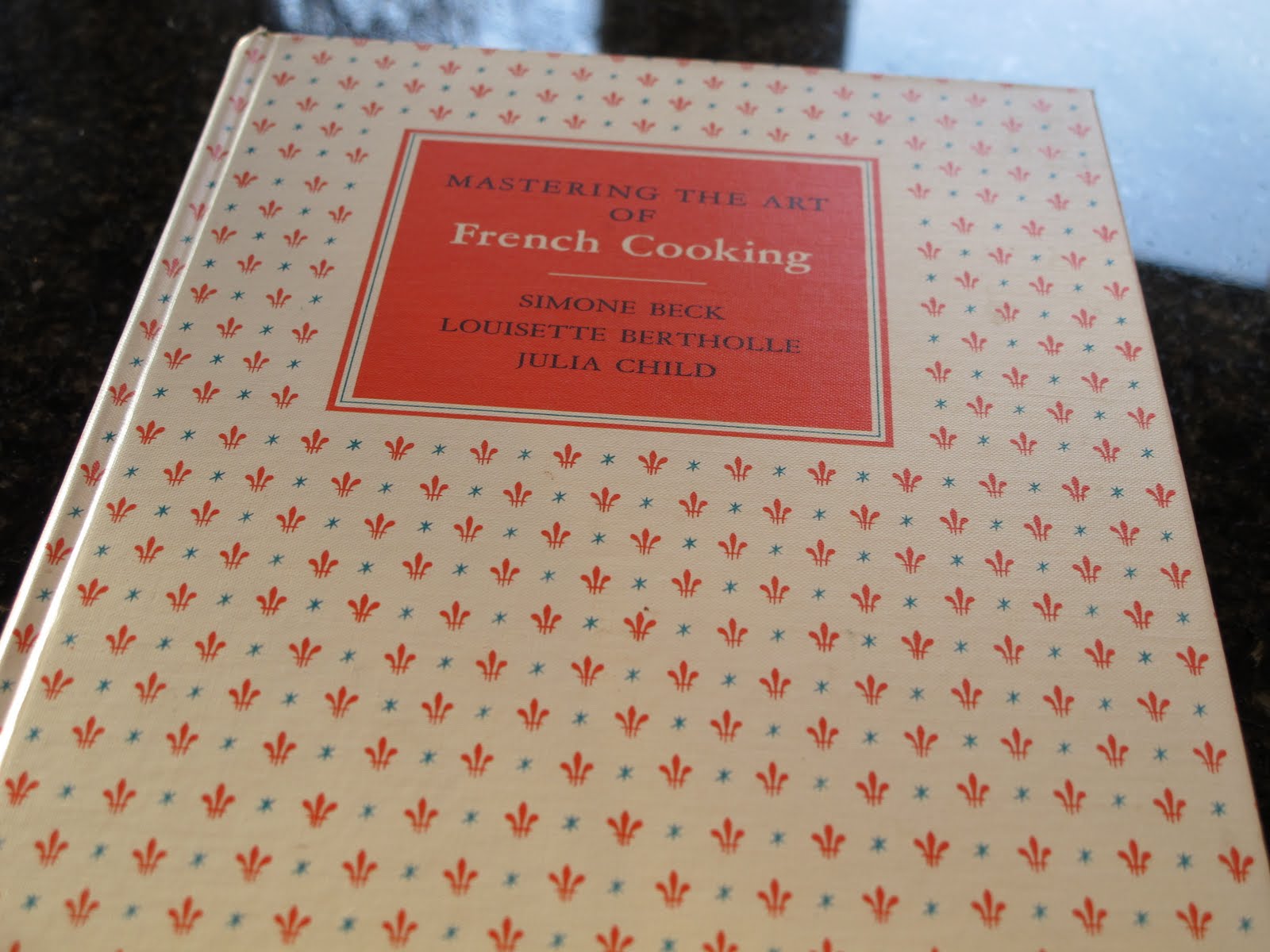
The most essential element of Boeuf Bourguignon is Julia's recipe. I'm very fortunate to have a "fifth printing" 1963 edition of Mastering the Art of French Cooking. I just got it this past spring from a dear friend. It was such a surprise. We were having a visit and discussing other stuff and she wandered in with this cookbook. I whispered to my husband that it’s the one I've been wanting - I was keen to get an early issue, and not a current one that can be bought in stores. She simply handed it to me saying I could keep it. I was jaw dropped. And thrilled.

So when the request for Boeuf Bourguignon came in - I knew exactly where to go. Page 315.


Although this dish isn't particularly complicated, it does require a few hours cooking time. So it's one of those perfect dishes where you get things going, then go onto other things (in my case cleaning/organizing my cupboards - I love Tupperware Modular Mates!).

The method seems quite similar to other stew methods (e.g. Osso Bucco),but there are a few small differences. First, starting the base with bacon. A brilliant start as you can never go wrong with bacon. I didn’t have exactly the right cut for doing lardons, but the strips seems to work sufficiently.


Second, the meat is browned in the fat without first dredging it in flour - the way I've usually seen recipes. You do add flour to the meat - but after the meat is browned - you toss the meat with flour and put for a few minutes in a high-heat oven. "This browns the flour and covers the meat with a light crust" says Julia.


Third, the mushrooms and pearl onions are prepared separately and then added at the end.


Lastly, I found that saying "Boeuf Bourguignon" throughout the process (actually throughout the day) with a Julia Child type flare, really added to the whole experience.


Although Julia recommends serving with boiled potatoes, we opted to go with here alternative recommendation, buttered noodles. I had the perfect noodles for this. It's a brand that is sold exclusively in Canada by La Bottega Nicastro in Ottawa. They are a bit pricier, but amazing. They were the perfect accompaniment to this dish.


Bon Appétit!